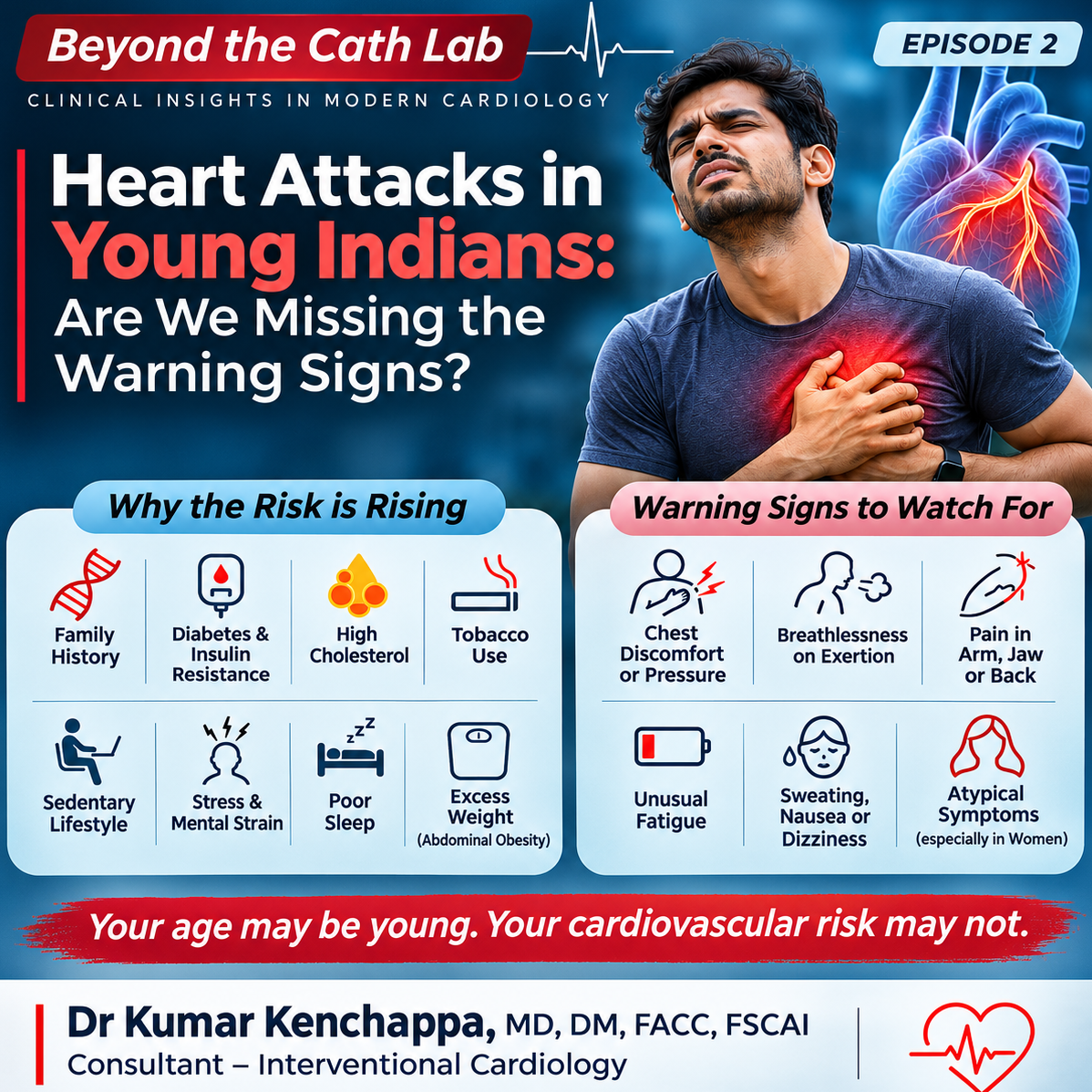
Heart Attacks in Young Indians: Are We Missing the Warning Signs?
Heart attacks are no longer confined to older adults. Increasingly, young Indians in their 30s and 40s are presenting with premature coronary artery disease, often without recognising their underlying cardiovascular risk.
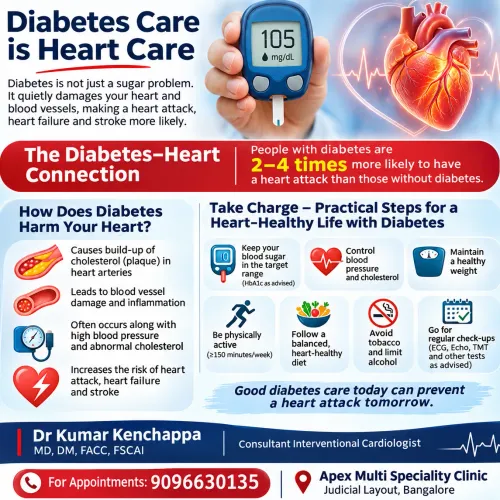
India faces a significant challenge from early-onset heart disease, driven by a combination of genetic predisposition, family history, diabetes, insulin resistance, abnormal cholesterol, smoking, abdominal obesity, physical inactivity and lifestyle-related stress.
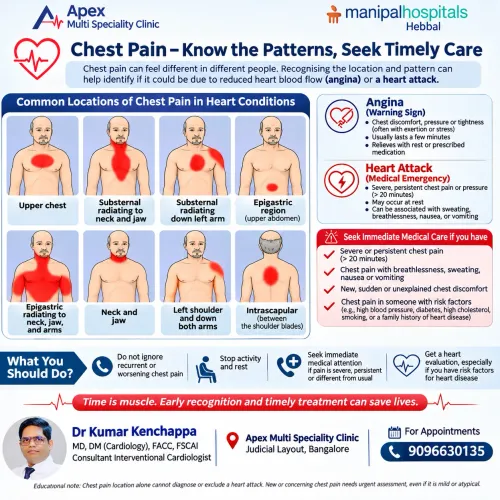
One of the biggest concerns is that many warning signs are overlooked or attributed to acidity, muscular pain, anxiety or simple fatigue.
Chest discomfort, unexplained breathlessness, pain radiating to the arms or jaw, unusual tiredness, excessive sweating, nausea and dizziness can all be manifestations of a cardiac event. Heart attacks do not always present with dramatic chest pain, and the absence of severe symptoms does not necessarily exclude a serious cardiac problem.
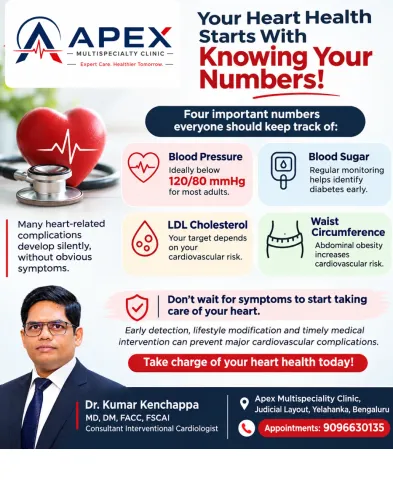
The good news is that many cardiovascular risk factors are identifiable and modifiable. Appropriate screening, including blood pressure assessment, lipid profile, diabetes testing and evaluation of family history, can help identify individuals at increased risk. Lipoprotein(a) testing is particularly relevant in selected individuals with premature coronary disease or a strong family history.
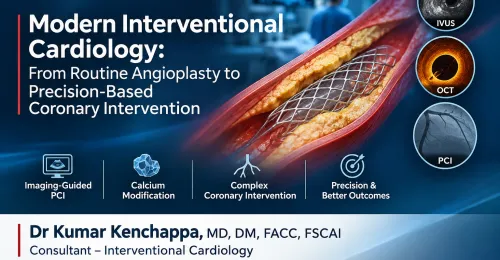
Equally important is recognising symptoms early. A suspected heart attack requires immediate medical evaluation, prompt ECG assessment and appropriate cardiac biomarker testing. Timely reperfusion, when indicated, can save heart muscle and lives.
Prevention must begin well before the first cardiac event. Healthy eating, regular physical activity, adequate sleep, tobacco cessation, weight management and appropriate treatment of diabetes, hypertension and dyslipidaemia are essential.
The central message is simple: Your age may be young, but your cardiovascular risk may not be.
We need to move from reactive cardiac care to proactive prevention, identify high-risk individuals early and ensure that no warning sign is ignored.
An informed patient is often a better-protected patient.
Dr Kumar Kenchappa, MD, DM, FACC, FSCAI
Consultant – Interventional Cardiology
Beyond the Cath Lab | Clinical Insights in Modern Cardiology
Keywords